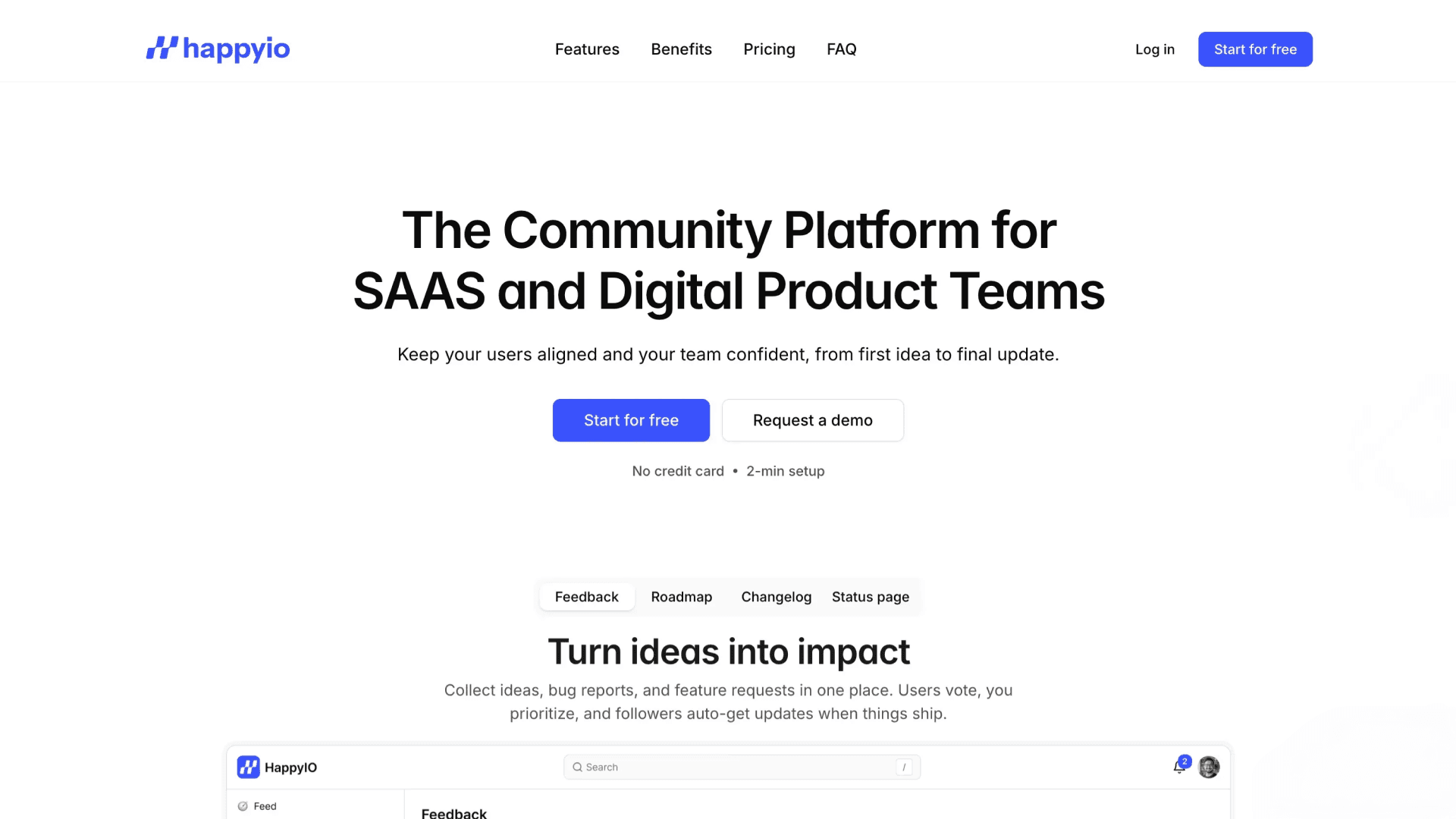
HappyIO was a "plug and play" engagement platform unifying feedback, roadmap, changelog, status page, and forum replacing 5-7 fragmented tools with one solution. Designed for indie hackers and mid stage SaaS teams who need fast feedback loops without complex setup.
Role
Product designer
Team of 3 (1 PM, 1 designer, 1 developer)
Responsibility
End to end product design across five modules
Challenges
The market was already crowded with established players like Canny, FeatureOS, UserJot, and Frill.
My job wasn’t just to design well. It was to design in a way that kept a 3 person team shipping without accumulating structural debt, and to engineer the fastest possible “aha” moment for users.
Widget System - Making Instant Actually Feel Instant
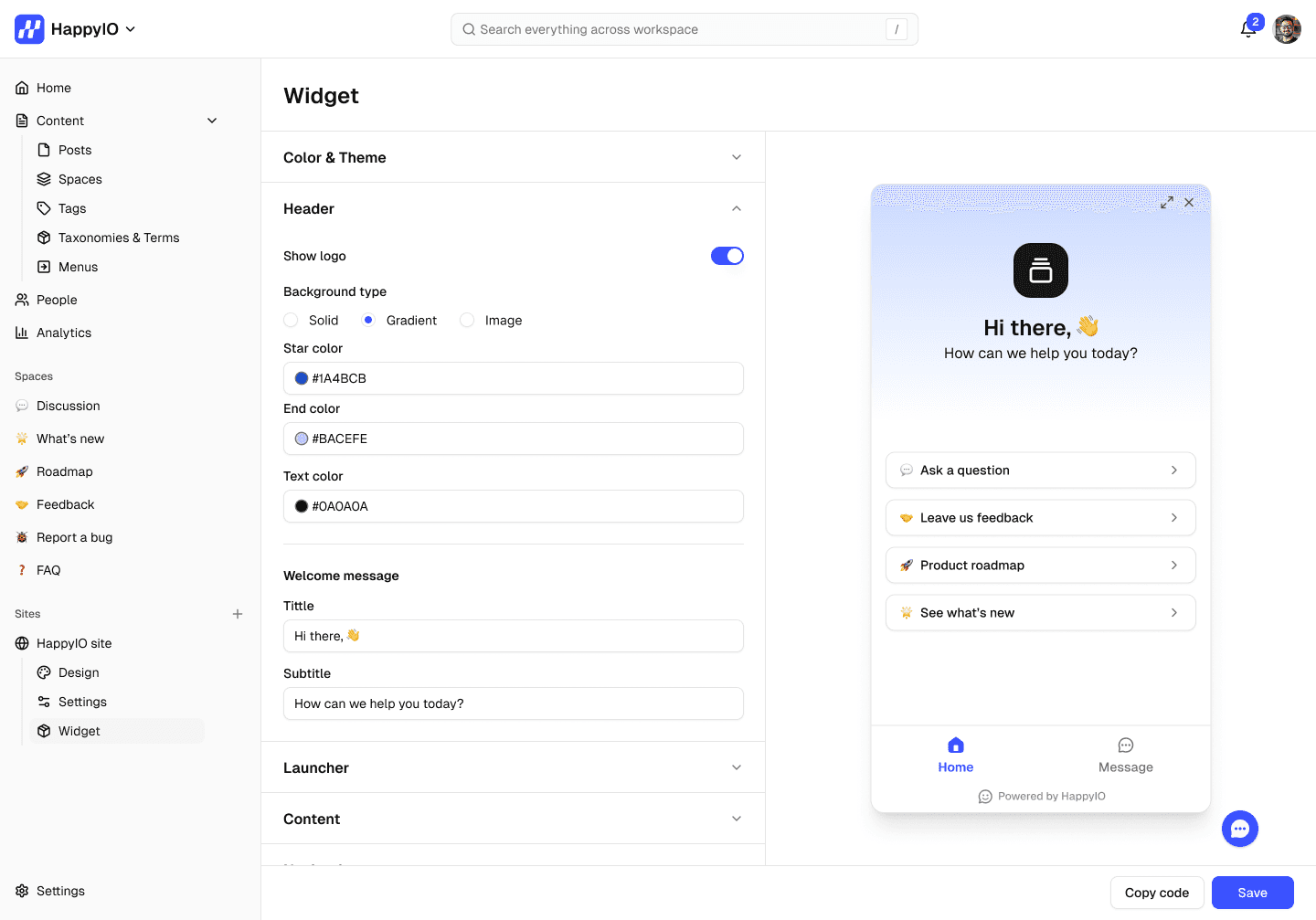
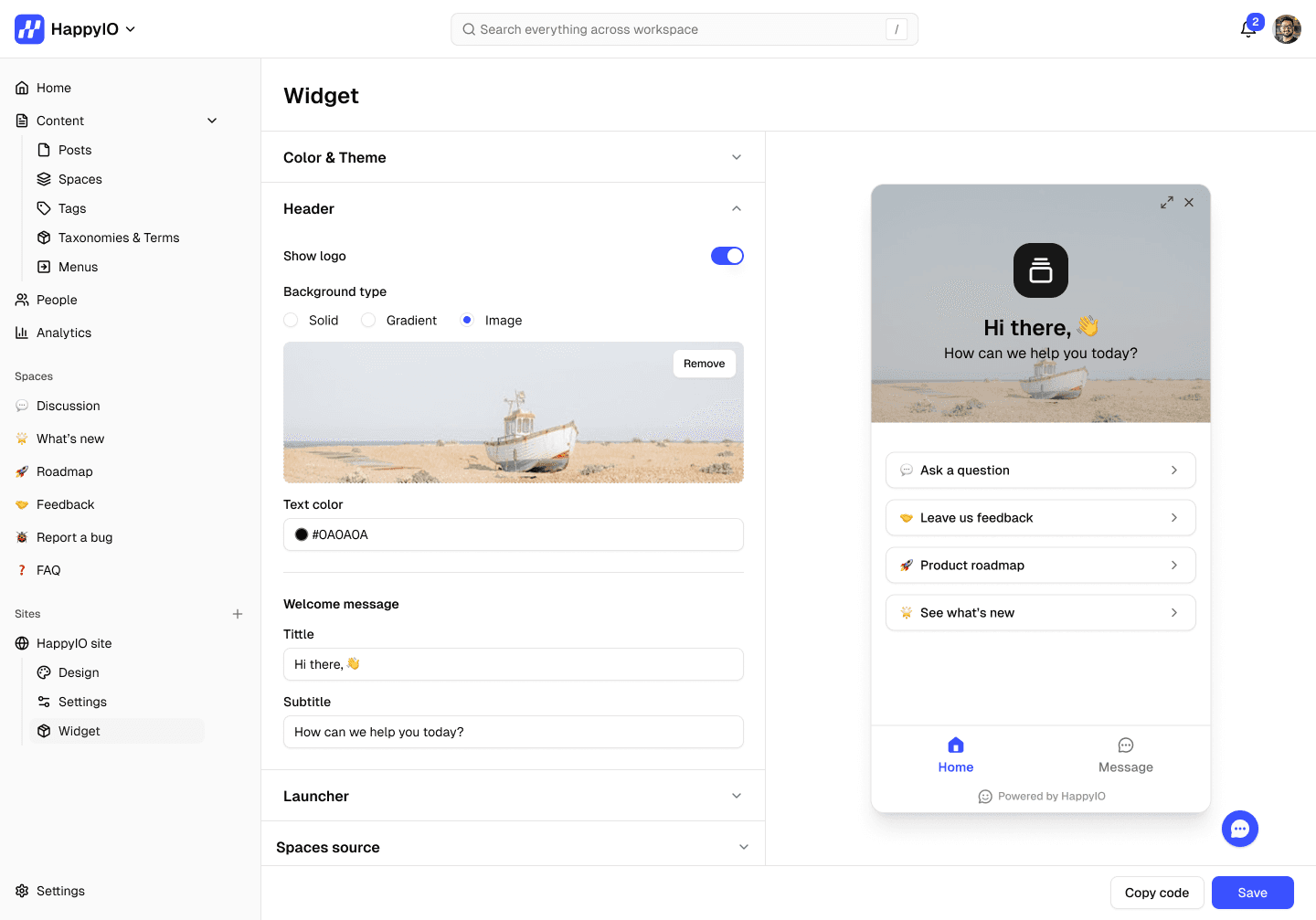
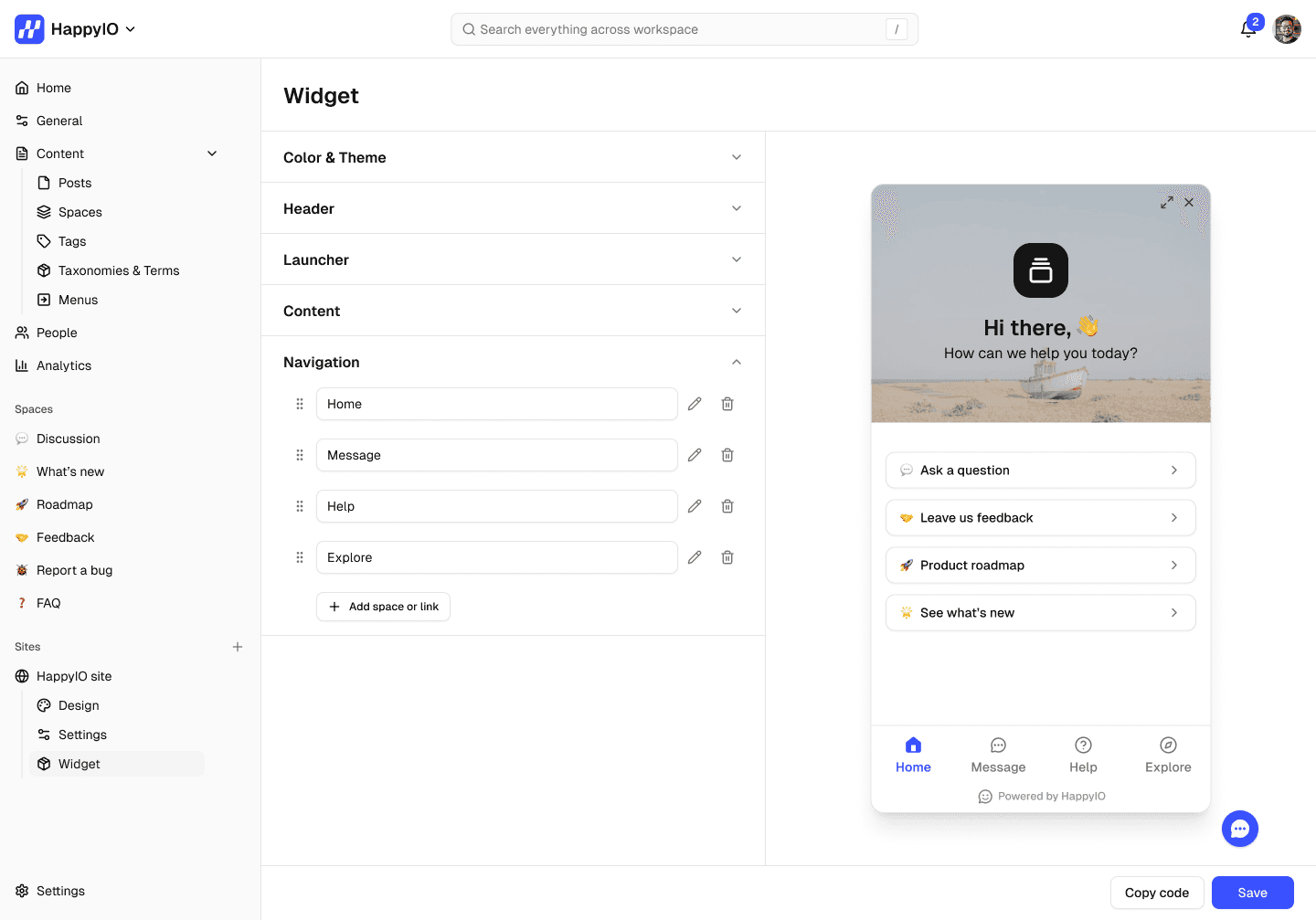
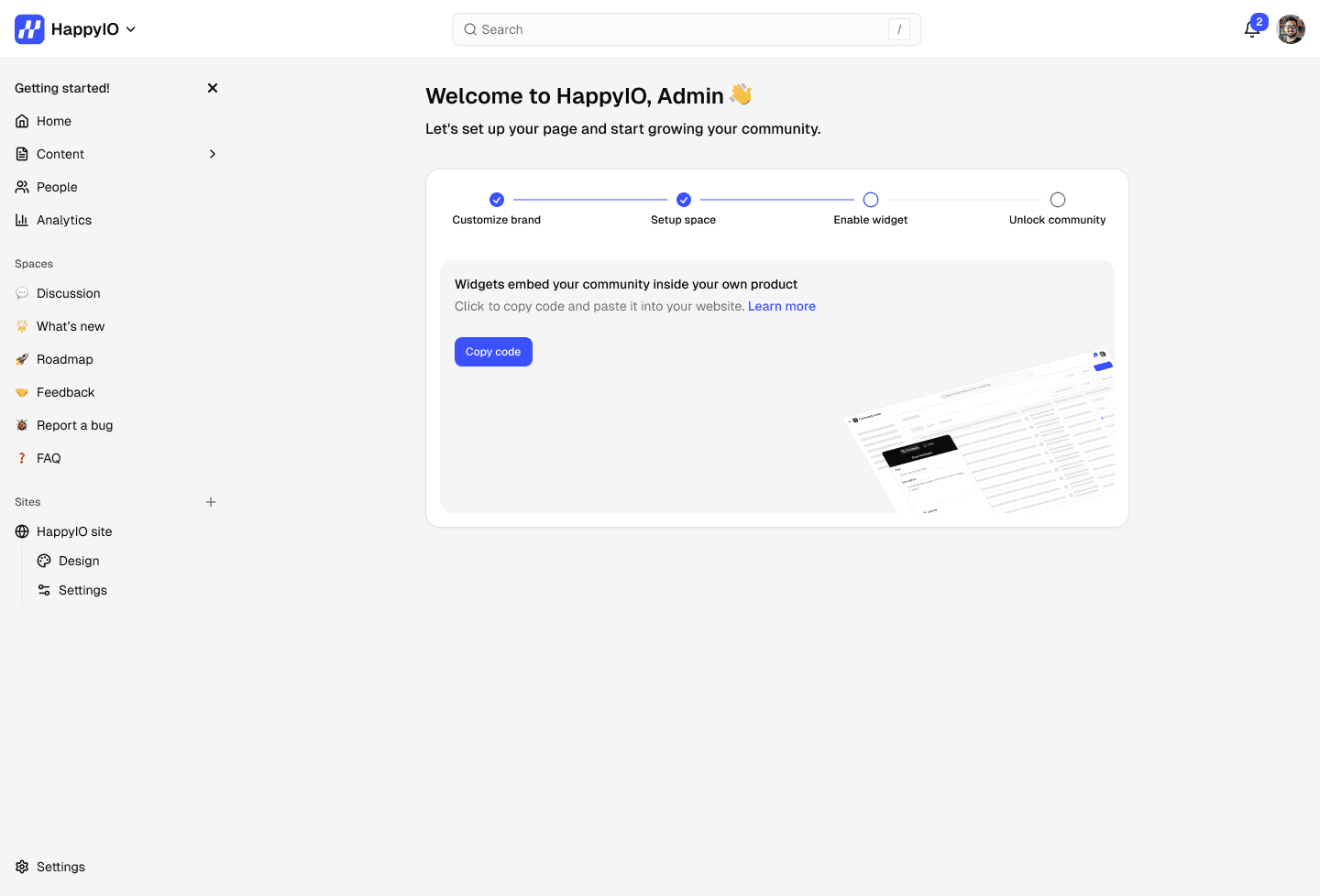
The embeddable widget was our biggest selling point. Drop a line of code into any existing website and start collecting feedback immediately, no developer required, no lengthy setup. That was the promise.
So I designed the widget setup as a live experience. Users adjust their branding, toggle features on and off, and watch a real-time preview update as they go. By the time they're done, the code snippet is already generated. Copy, paste, done. What started as a potentially complex developer task became something a non technical founder could complete in five minutes on their own.
Onboarding - Cutting from 6 Steps to 4
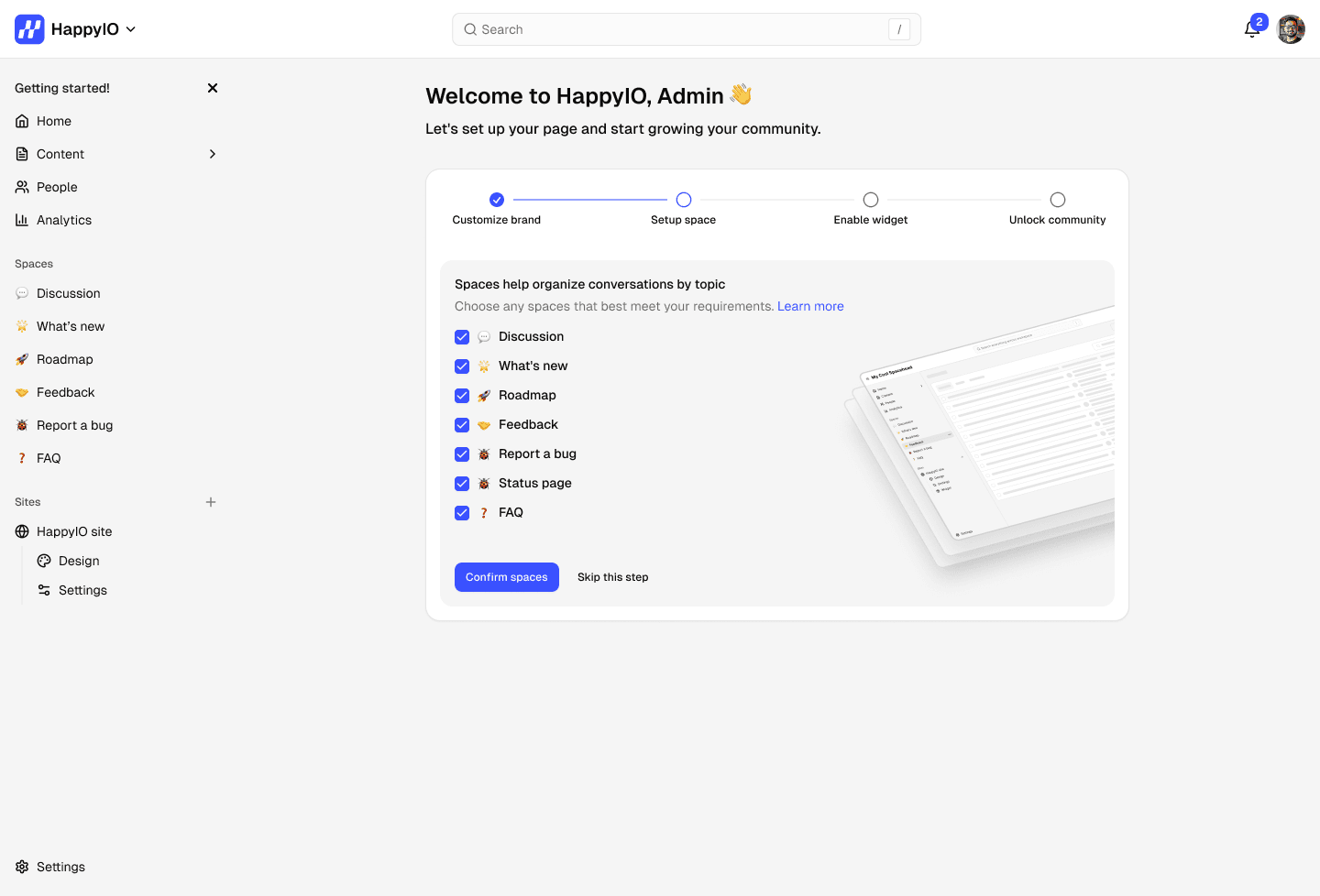
Onboarding became a priority because acquisition only creates opportunity. Activation happens when users successfully experience value, and onboarding determines whether that happens or not.
The initial onboarding had 6 steps designed to familiarize users with the product. It included creating a post and customizing status, but they served as teaching moments, not immediate value.
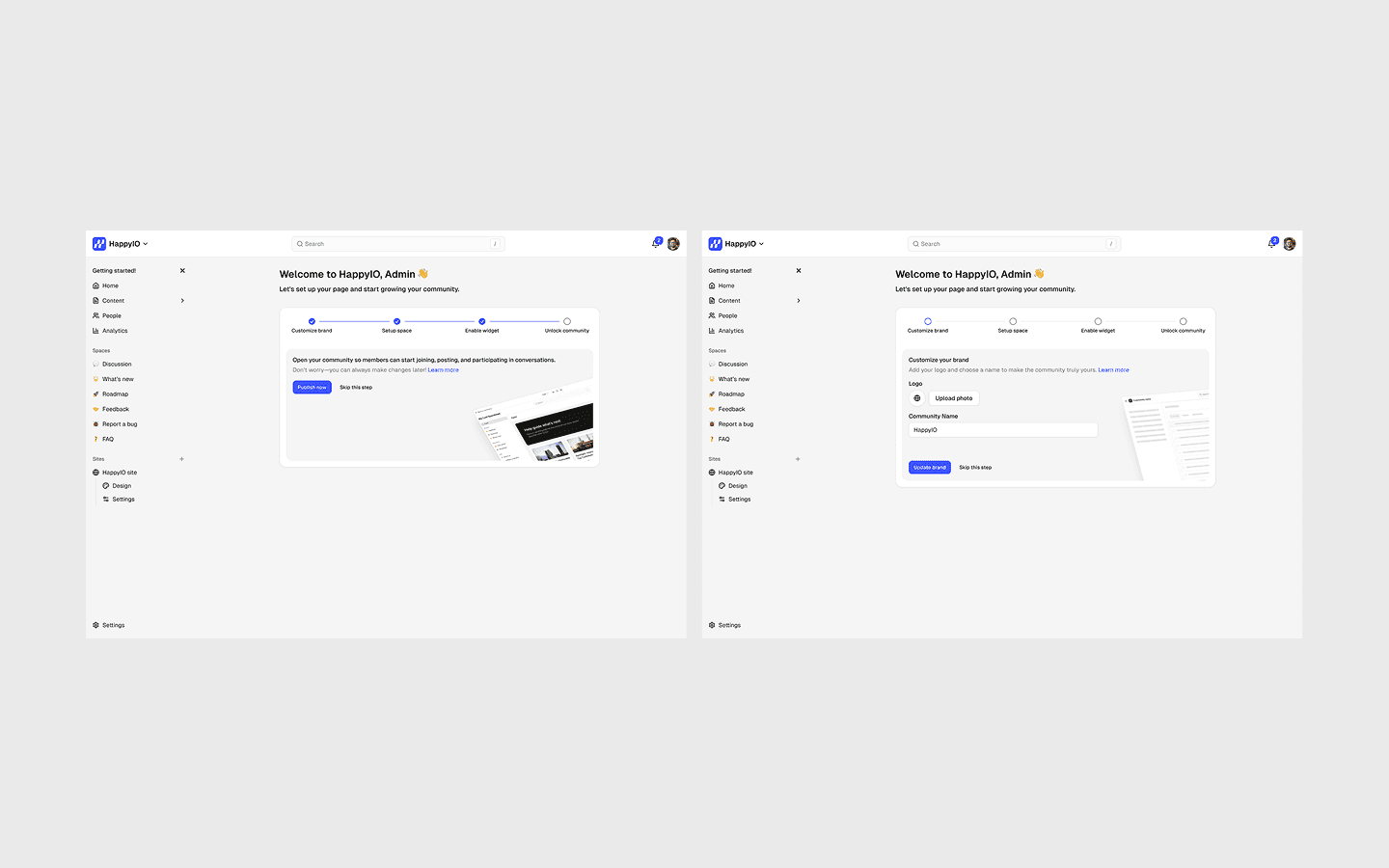
We reduced onboarding to 4 steps focused on first time value: customize brand, set up space, enable widget, and launch site.
Less friction. Faster path to something live.
Outcome
Shipped a complete platform featuring 5 integrated modules and over 300 screens in 8 months as the sole designer. The widget was validated by the developer as a genuine integration, and onboarding landed at 4 steps after iterating down from 6. Two weeks post launch, the team pivoted after seeing insufficient market traction.
Takeaway
Speed only matters if you're pointed at the right problem. AI augmented workflow let a solo designer match team scale output, but execution speed amplified the wrong hypothesis just as fast as the right one.
The real lesson: front-load validation. Not after the launch. Before the first screen.