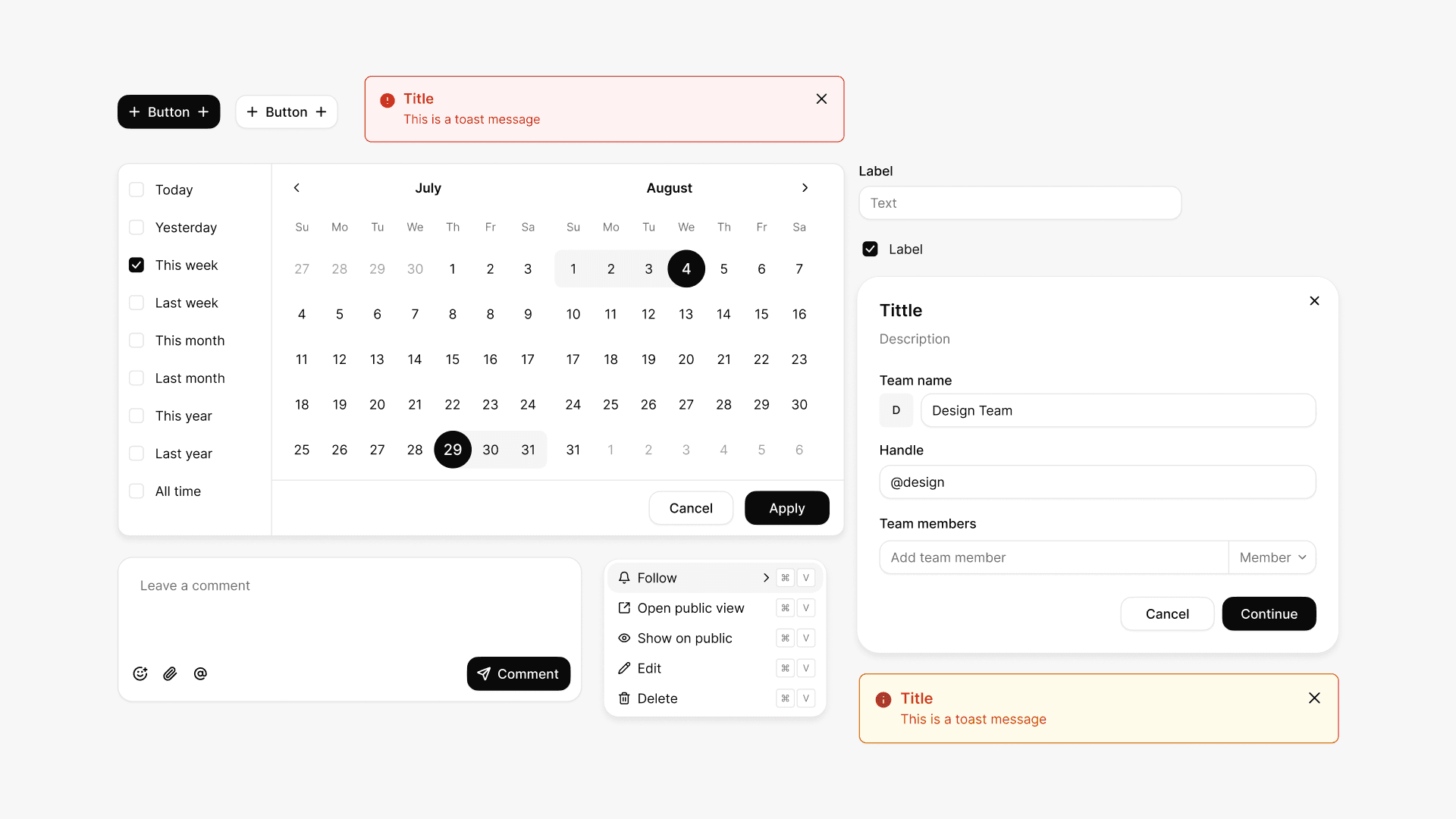
UI Core is a Figma-based UI component kit powered by design tokens, built to help freelancers and small agencies ship faster without recreating UI foundations for every new client. Launched in 2023, it was among the first UI kits on the market to apply design tokens in a practical, production-ready way.
Role
Solo builder
Responsibility
Design System Architect, Research, Build, Go-to-market
Challenge
In 2023, while working as a product designer in an outsourcing agency, I repeatedly faced the same problem across projects: rebuilding UI components from scratch to match different client brands and requirements. This repetitive setup work consumed time, reduced focus on real product problems, and slowed delivery speed.
Outsourcing projects required fast turnaround but inconsistent branding across clients meant reusable components were rarely reusable in practice. Lack of a scalable system meant every project restarted from zero: colors, typography, spacing, and components.
At the time, most UI kits on the market focused on static components, not adaptability across brands or platforms.
As a solo builder, I had to learn and implement design system fundamentals without internal system support or mentorship.
Research Approaches
I studied established design systems to understand how large organizations solved scalability like Adobe Spectrum, Lightning Salesforce, Shopify Polaris, IBM Carbon, Goldman Sachs.
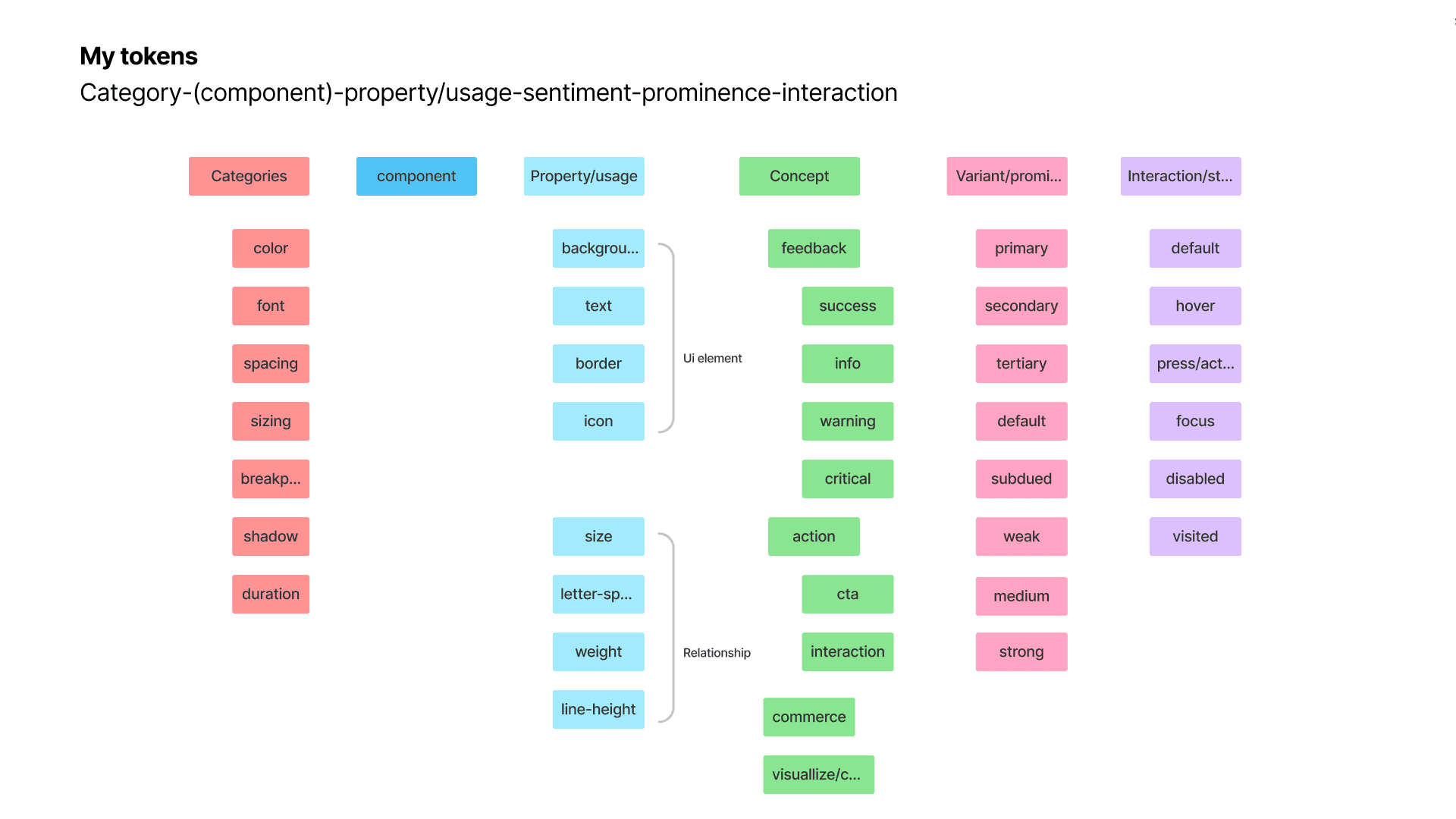
For design tokens, naming convention is also a big interesting rabbit hole to research.
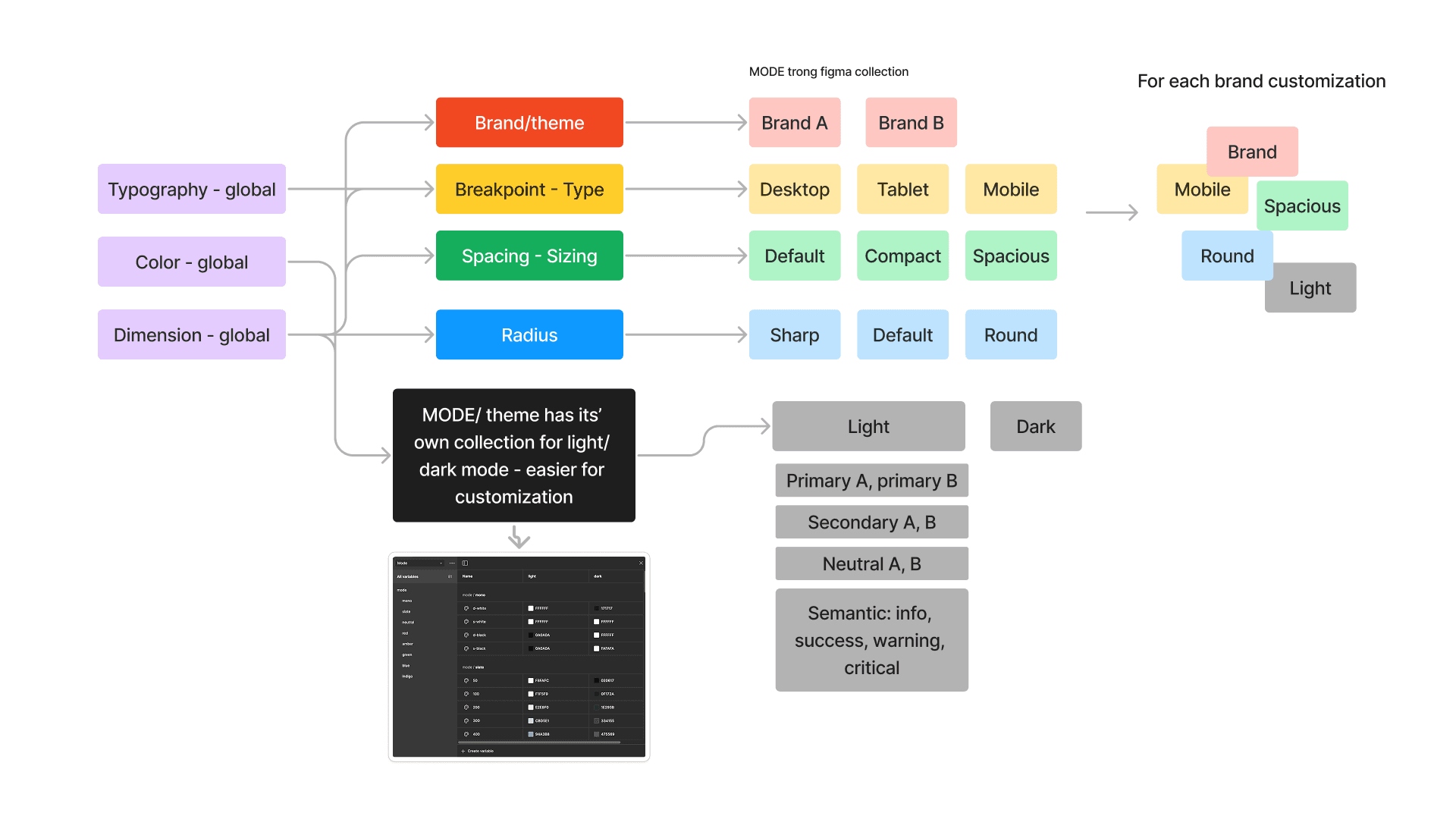
In parallel, I learned and experimented with Token Studio (formerly Figma Tokens) later with figma variables, focusing on how design tokens could bridge branding flexibility and component reuse.
Design process
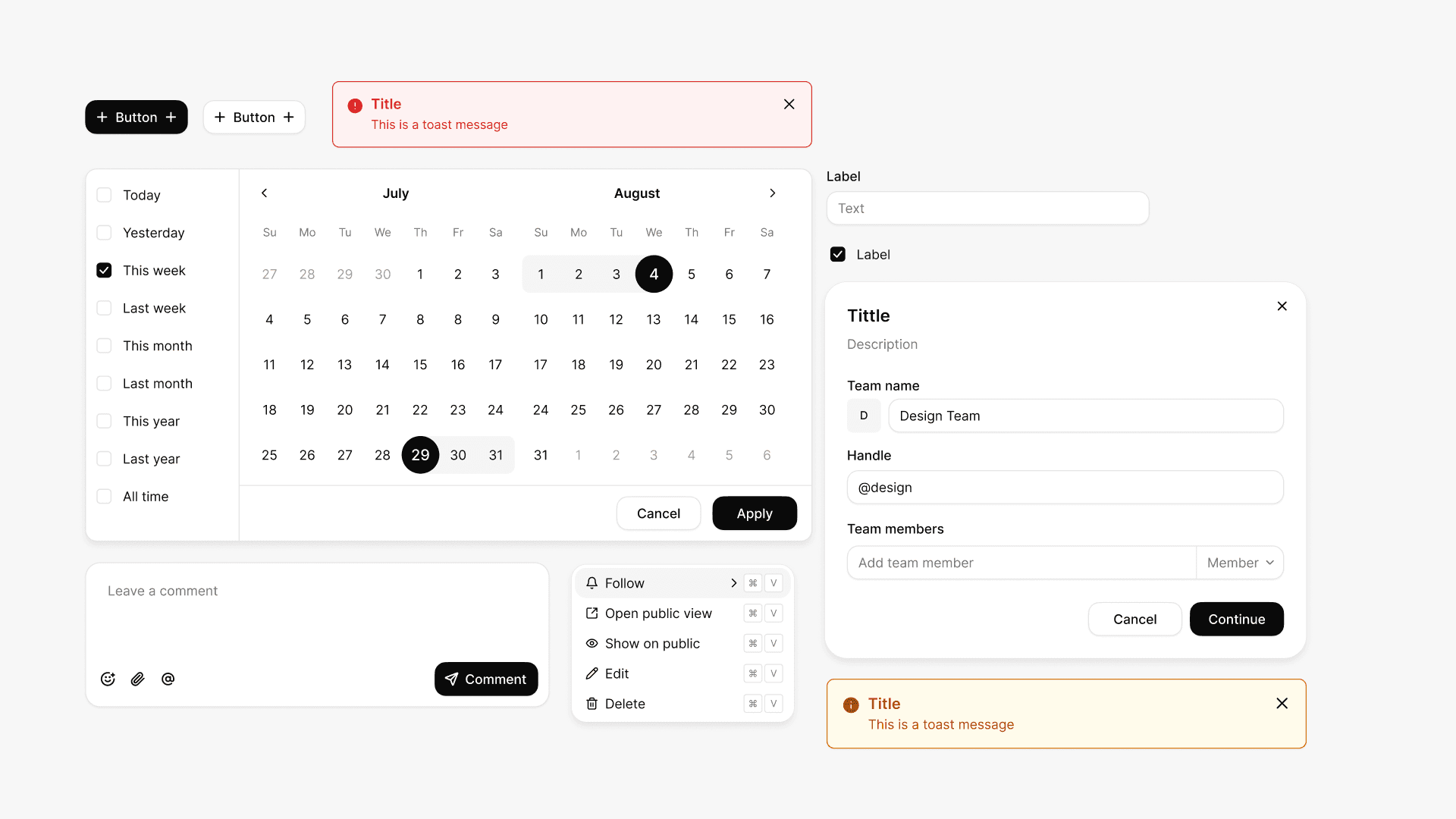
Starting with foundational components like buttons, input fields, and date pickers, the UI kit gradually scales to include complex elements such as calendars, task views, and chat components, adding versatility to the design system.
Furthermore, the kit provides native support for light and dark modes, along with adjustable typography scales (with base sizes of 14px and 16px), brand, sizing to accommodate diverse user preferences.
Outcome
Launched as one of the first UI kits on the market in 2023 to meaningfully integrate design tokens.
Achieved early market validation with paying users.
Reduced UI setup time dramatically for branding-heavy projects, replacing repetitive component rebuilding with token-level customization.
Established a strong personal foundation in design systems, tokens, and scalable UI architecture that later informed larger product and system work.
Know enough to share an article on my subtack page about setting up Figma variable
Vibe coding tool (on-going) to support design system at https://tw-scale.vercel.app/
Takeaway
Building design systems has cultivated a systematic mindset, bridging the gap between design and engineering to ensure a seamless, scalable workflow.
To stay ahead of modern developments, I am currently exploring AI-driven automation specifically leveraging Model Context Protocol (MCP) to streamline the transition from design components to production-ready code.