Overview
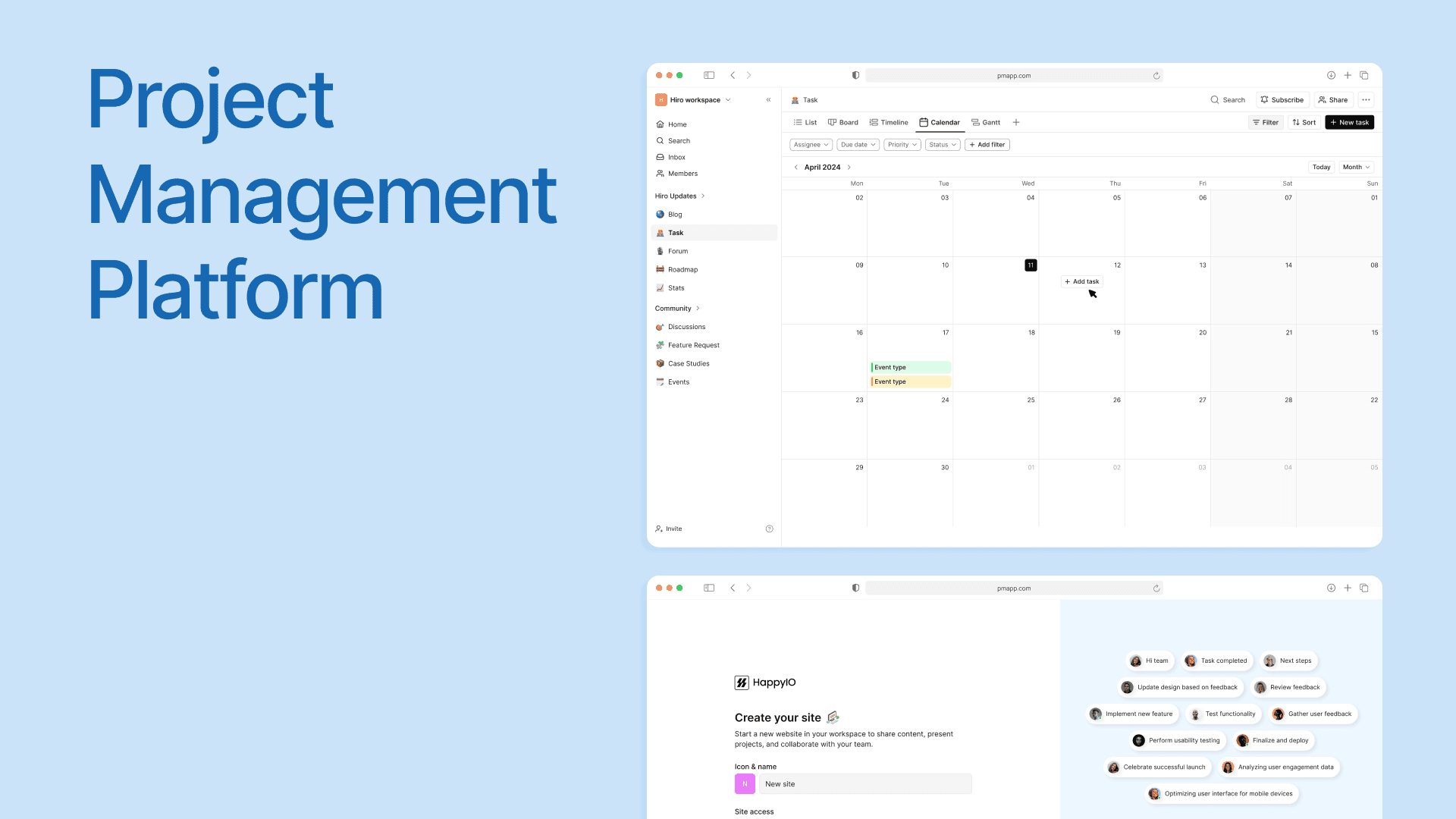
D10 was a project management platform combining flexible documentation with highperformance task management.
Role
Founding designer
Team of 2 (1 designer, 1 developer)
Responsibility
Market & Competitor Research
Information architecture & user flows
Visual design & prototyping
Feature prioritization with stakeholders
UI/UX QA and implementation documentation
Challenges
In modern product development, the challenge isn't just managing tasks, it's overcoming context gap. When insights are scattered across tools, information becomes siloed, outdated, and slow to access.
Engineers waste 20% of time searching for info.
Up to 70% of R&D time goes to documentation over innovation, 46% of delays stem from inaccessible knowledge.
Strategic Research & Insights
I analyzed popular project management tools for high level views of their main features, user segment, strength, weakness and their pricing structures.
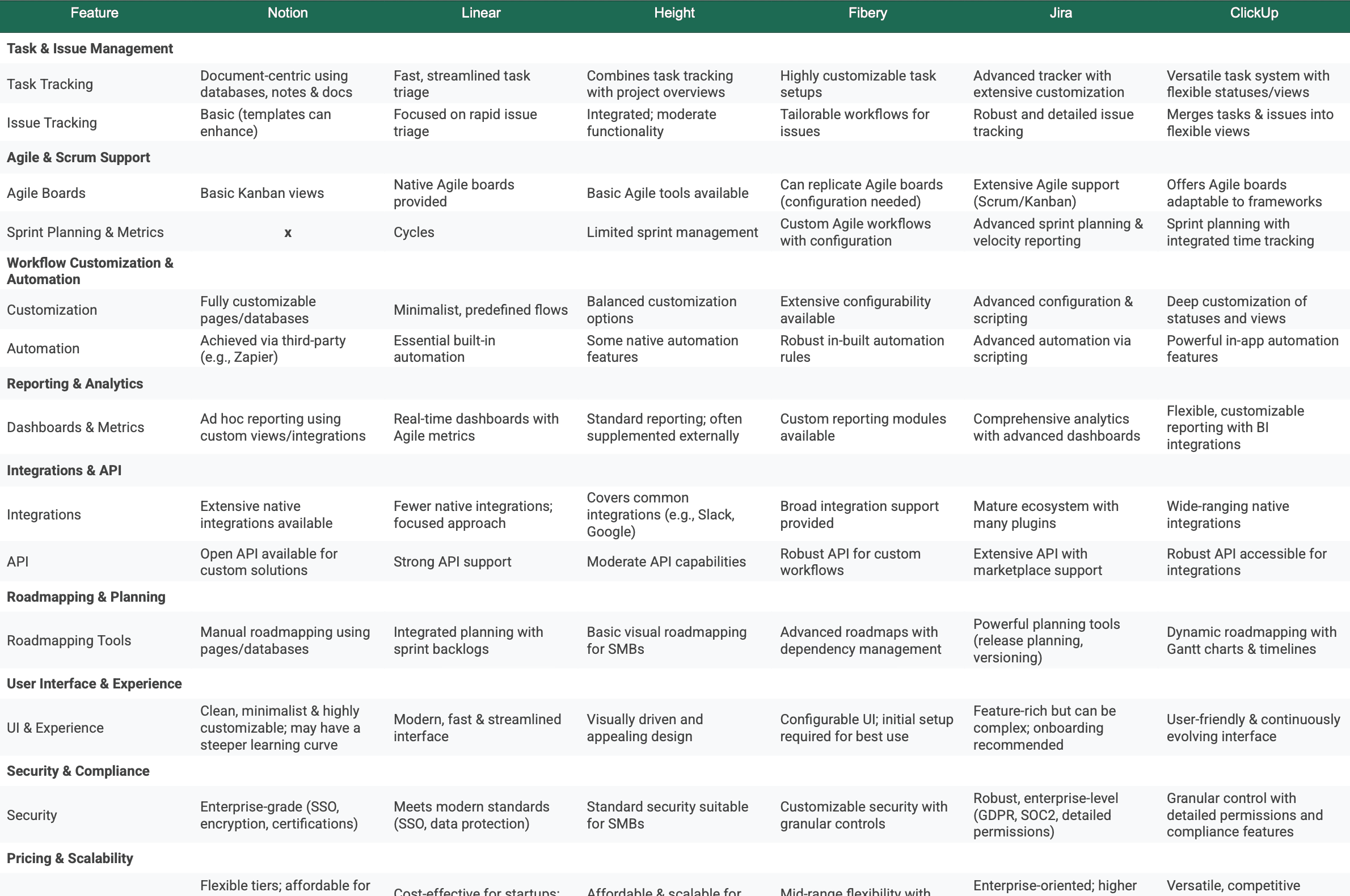
While features were often identical, I identified four strategic opportunities:
Unified Doc Hub: Most tools lack a doc space natively connect to task.
External Content: Integrating internal docs with publishable external spaces reduces tool-switching.
Strategic Prioritization: I intentionally deprioritized AI integration for the MVP to focus on perfecting the core context problem.
Value-Based Pricing: Positioning the tool at a lower price point by consolidating multiple workflows into one.
Design process
Starting with information architecture and user flows, I translated the unified hub concept into a structured MVP
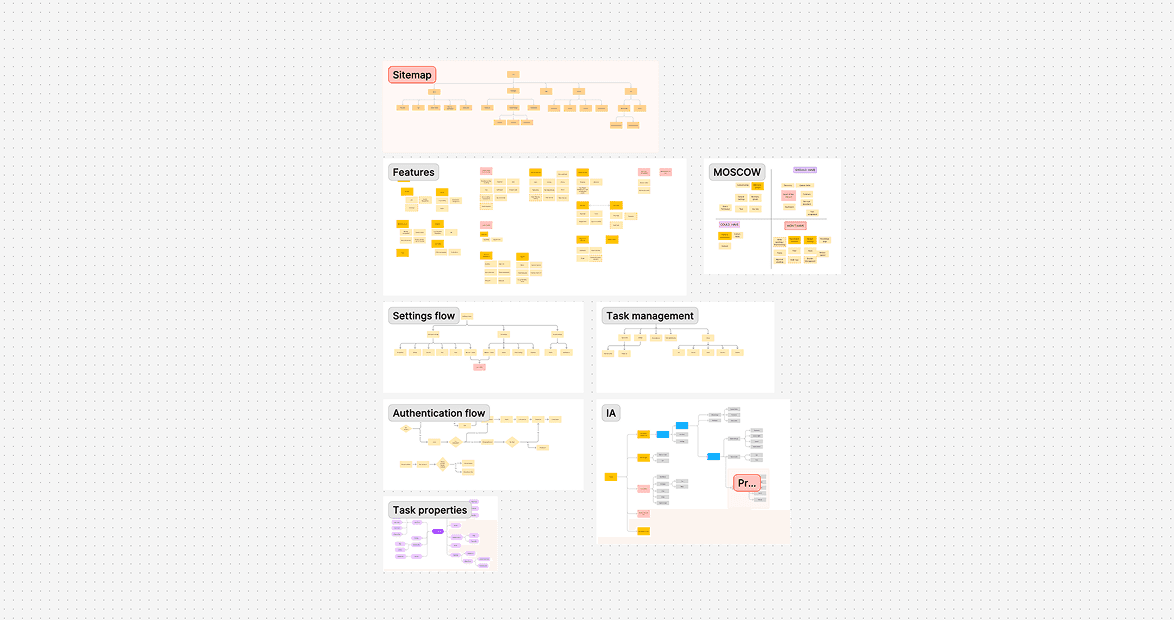
Information architecture, user flow and feature priority for an MVP scope.
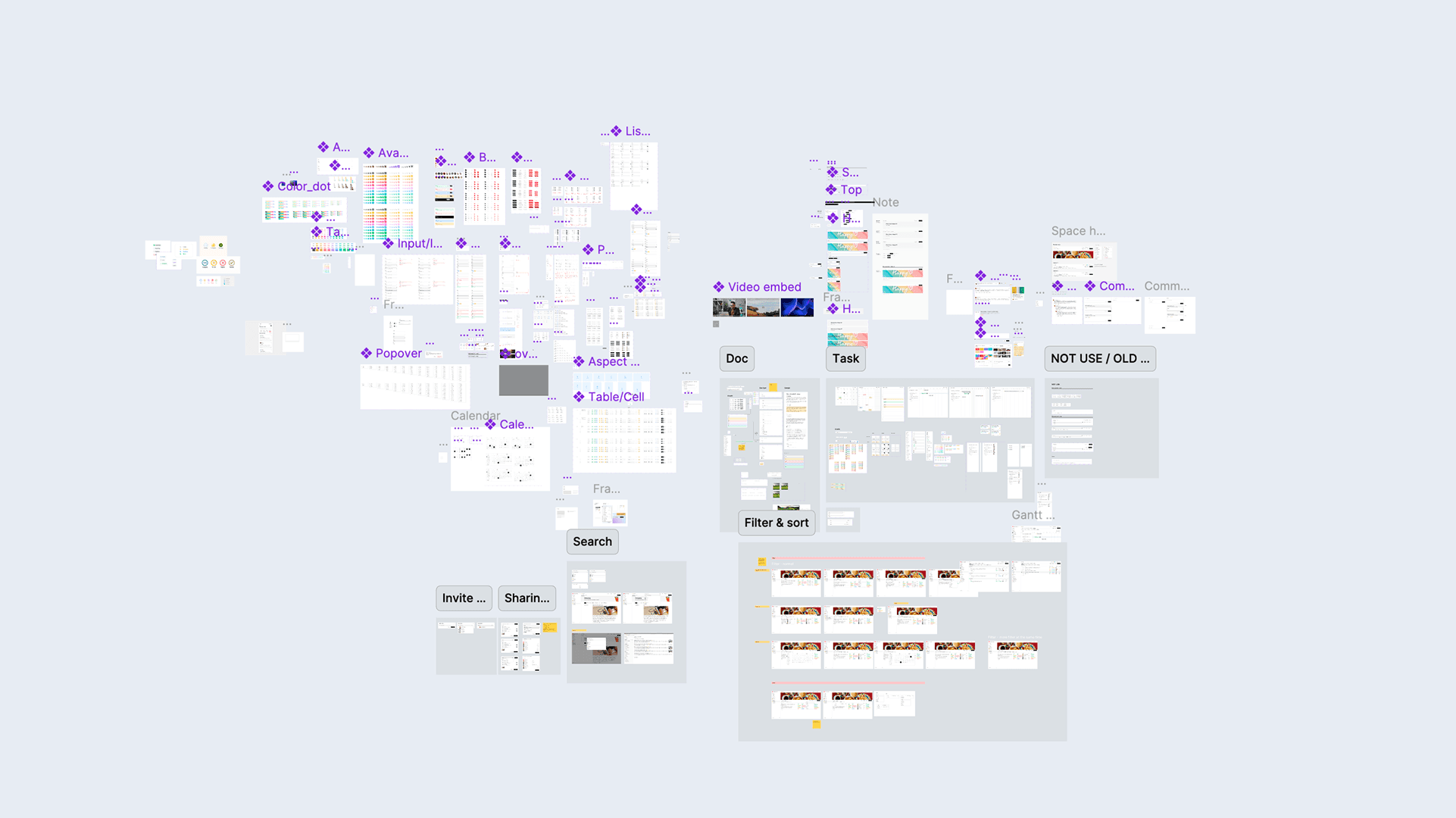
Reusable components and patterns that reduced design debt while enabling the single developer to implement consistently.
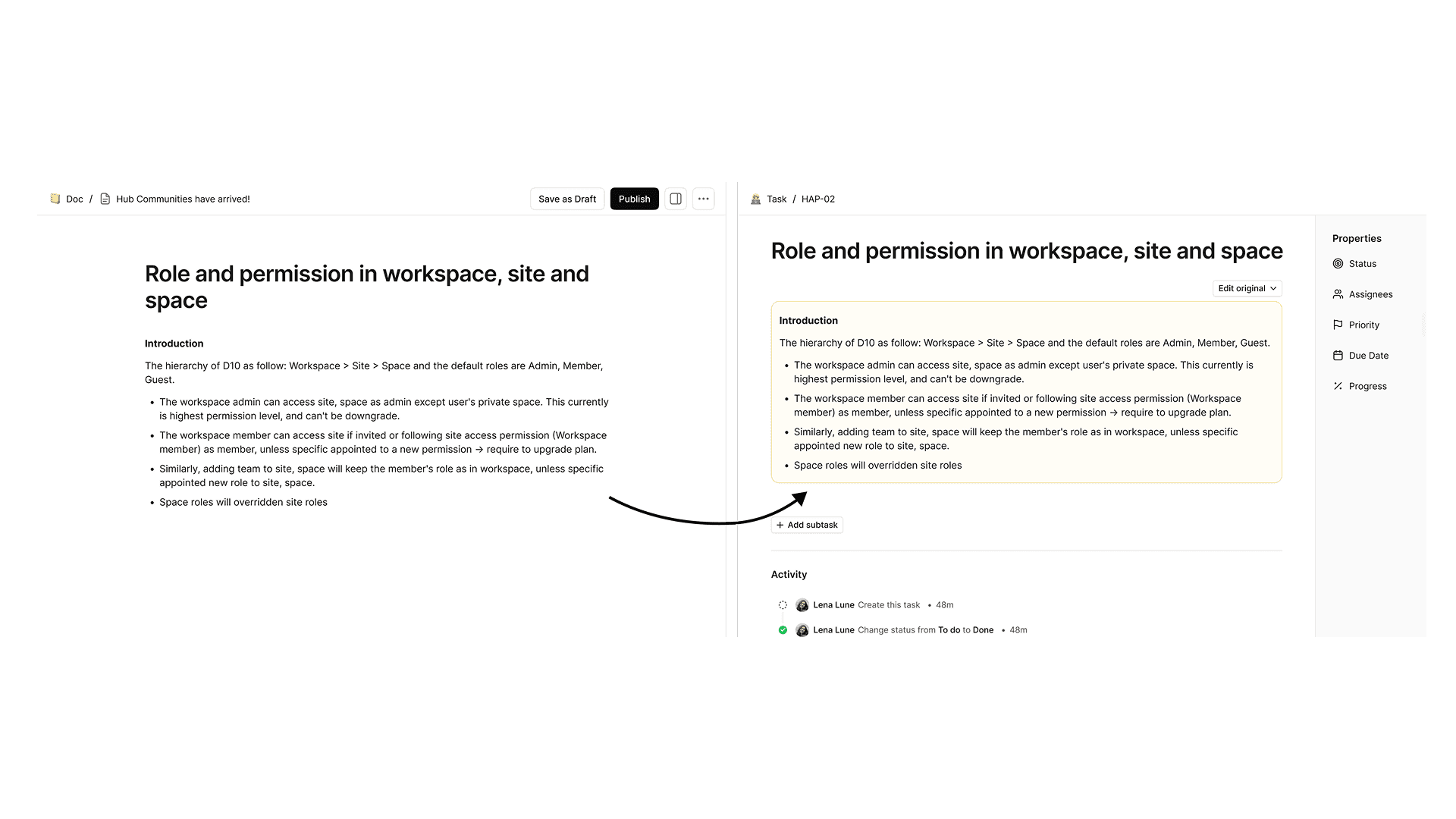
I adopted the synced block pattern to ensure unified content. Update in one place, update everywhere.
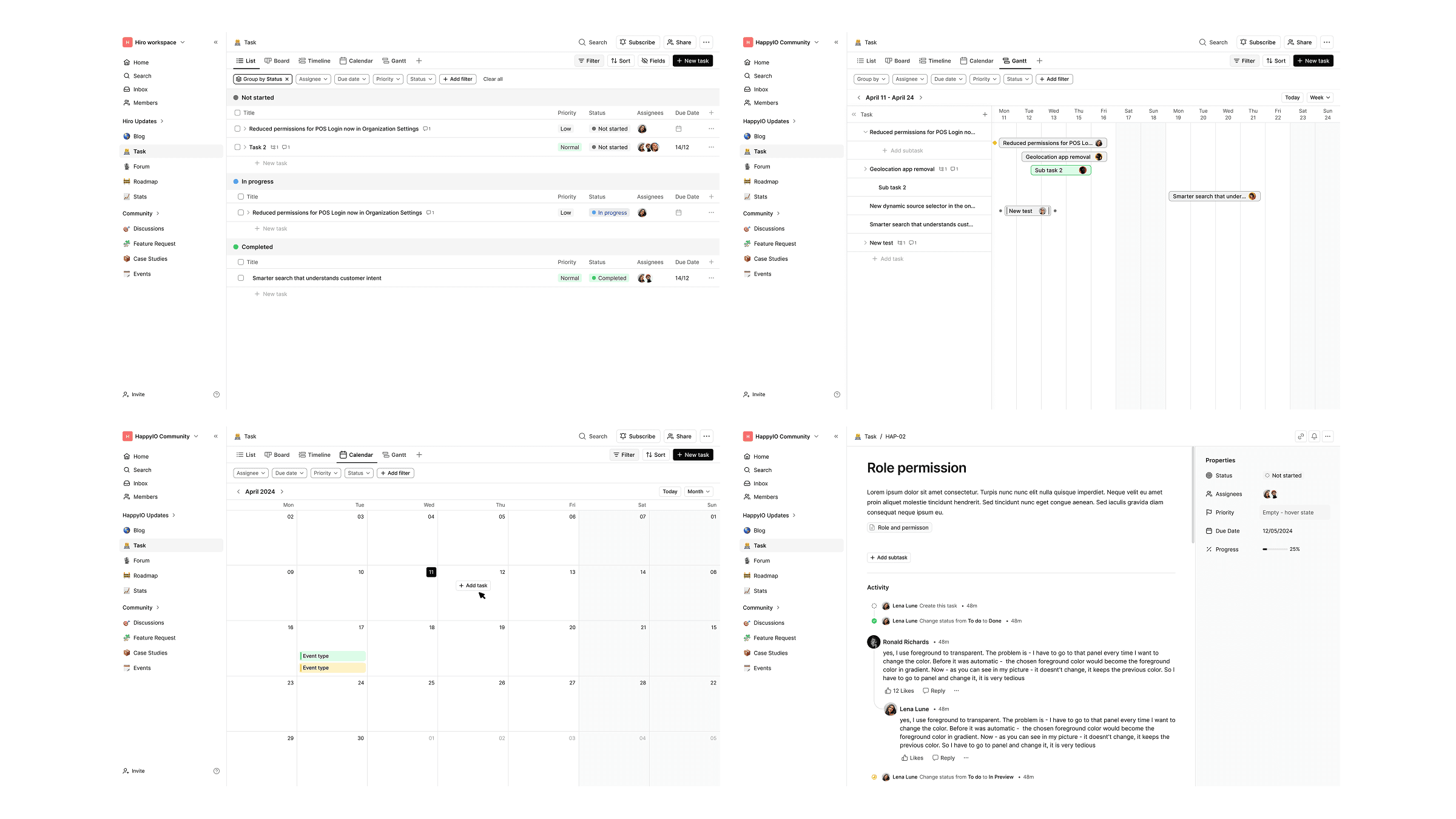
Driven by user research, the interface features Timeline, Gantt, and Calendar views to meet complex workflow requirements.
Outcome
Successfully reached a functional staging environment with internal and publishable document spaces.
Stakeholder assessment revealed that without significant resources, we could not compete with the rapid AI advancements of market leaders.
Takeaway
Led end to end product development from 0 to 1 with a 2 person team, gained hands-on experience in scoping, prioritization, and shipping under resource constraints.
Learned the cost of delayed validation: ship MVPs to real users within 4-6 weeks, iterate based on behavior data.
Resource constraints are strategic constraints: MoSCoW helped manage internal scope, but didn't address external competitive pressure. Timing markets requires ongoing validation, not just launch day readiness.